Large trees add beauty and shade, but their roots can quietly destabilise your home’s foundations, contributing to tree roots foundation damage. In Victoria’s reactive clay soils, tree roots foundation damage often lead to costly structural damage.
This guide explains how tree roots affect soil moisture, the warning signs to look for, and how a qualified structural engineer can help protect your home.
Request a Foundation Assessment
How Tree Roots Damage Foundations
Trees naturally draw water from the soil to survive. In reactive clay soils, this water extraction can cause soil drying and shrinkage, which lowers the ground beneath nearby slabs or footings.
When the soil later re-hydrates after rain, it swells again — creating repeated cycles of expansion and contraction that place stress on your structure.
Common issues caused by tree root drying include:
Understanding the impact of tree roots foundation damage is crucial for homeowners.
- Localised settlement and cracking on one side of the house
- Gaps forming under footings or paved areas
- Cracks radiating from windows or corners
- Roots invading stormwater or sewer lines
- Uneven slab moisture levels or differential movement
For background on how soil movement impacts footing systems, see the Building & Plumbing Commission guide on managing reactive soils.
Trees Most Commonly Linked to Structural Damage
Some trees consume large amounts of water and have far-reaching roots.
Species most often linked to tree roots foundation damage include:
- Eucalyptus and gum species
- Willows and poplars
- Elms, oaks, and plane trees
- Shrubs or hedges planted too close to foundations
Even medium-sized trees can cause damage if planted within a few metres of a home built on reactive soils.
Early Warning Signs of Tree Root Drying
If you notice cracks or ground movement that worsen during dry months, you may already be experiencing tree root drying around your foundations. Common signs include:
- Seasonal cracks that widen in summer and narrow after rain
- Doors or windows binding on one side only
- Uneven floors or visible soil subsidence near garden beds
- Leaning fences or tilting retaining walls
These changes suggest the soil moisture balance beneath your slab is uneven — a classic symptom of root-related drying.
How Structura Engineering Inspections Can Help
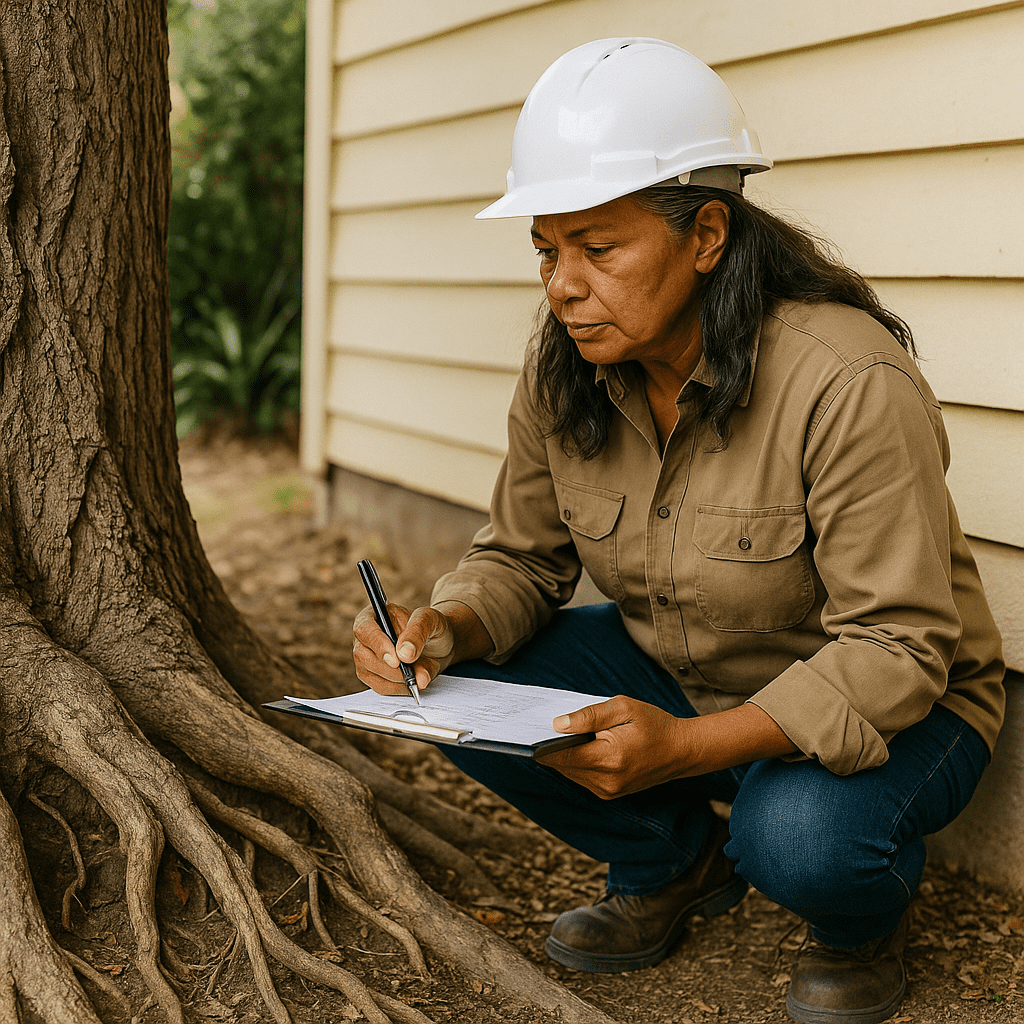
At Structura, our engineers use moisture pattern testing, soil profiling, and proximity mapping to determine whether tree roots are influencing foundation movement.
We provide clear, evidence-based recommendations on whether to prune, remove, or manage the trees to stabilise your site.
Each report is designed for council, insurance, or VCAT submission and includes diagrams, soil classifications, and moisture readings where relevant.
Prevention Tips for Homeowners
The best way to prevent tree roots foundation damage is to manage planting and moisture evenly around your property.
Our engineers recommend:
- Keeping large trees at least 1.5 × mature height from your home
- Maintaining consistent watering to reduce soil shrinkage
- Installing root barriers if replanting near structures
- Checking stormwater and sewer systems for leaks
- Regular foundation inspections in reactive soil areas
Consistent soil moisture is the simplest way to prevent differential movement and future cracking.
Cost and Turnaround
- Site inspection & report: verbal options from from $750 + GST
- Turnaround: 3–15 business days
- Optional: VCAT-ready expert report
Book Your Tree Root & Foundation Inspection
Final Thought – Manage Trees Before They Manage Your Home
Tree roots are a silent but powerful force beneath your foundations.
Early diagnosis and soil monitoring prevent uneven settlement, cracked walls, and expensive structural repairs.
Get peace of mind with a professional tree roots and soil drying inspection from Structura Engineering Inspections.
Tree roots can draw moisture unevenly from reactive clay soils, causing shrinkage and ground movement that leads to slab heave, cracking, or structural distortion. This process often goes unnoticed until significant damage appears. Our engineers use detailed on-site assessments, moisture readings, and visual mapping to identify areas of concern early. By understanding the interaction between vegetation, soil, and structure, Structura helps homeowners prevent future foundation movement and protect their investment.